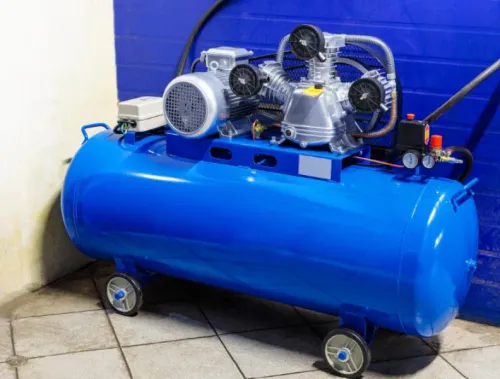
Compressed air is an essential utility in textile manufacturing, supporting everything from weaving and spinning to dyeing, finishing, packaging, and automation. Because production lines often rely on a continuous supply of compressed air, selecting the right equipment is an important operational decision. A Textile Industry Reciprocating Air Compressor continues to be a practical solution for many small and medium-sized textile manufacturers that require dependable performance, straightforward maintenance, and cost-effective operation.
For textile businesses across Tamil Nadu, Kerala, Karnataka, and industrial centres such as Chennai, Coimbatore, Palakkad, Mangalore, and Shimoga, understanding the role of reciprocating air compressors can help improve efficiency while supporting reliable day-to-day production.
Why Compressed Air Is Important in Textile Manufacturing
Modern textile factories use compressed air in multiple stages of production. Without a dependable air supply, several manufacturing processes may experience interruptions.
Typical applications include:
- Operating pneumatic machinery
- Controlling automated production equipment
- Running air-powered tools
- Cleaning machinery and workstations
- Supporting packaging systems
- Assisting material handling equipment
A consistent compressed air supply helps maintain smooth workflow and minimises production delays.
What Is a Reciprocating Air Compressor?
A reciprocating air compressor uses pistons inside cylinders to compress air before storing it in a receiver tank. The stored air is then supplied to equipment whenever required.
This technology has been widely adopted because it offers:
- High air pressure capability
- Reliable mechanical operation
- Easy maintenance
- Long service life with proper care
- Availability in multiple capacities
For many textile businesses with moderate to high air demand, reciprocating compressors provide a dependable and economical solution.
Advantages for Textile Manufacturers
A Textile Industry Reciprocating Air Compressor offers several practical benefits that align well with manufacturing environments.
These include:
- Reliable compressed air delivery
- Durable construction for industrial use
- Straightforward servicing
- Suitable for varied production requirements
- Flexible capacity options for different factory sizes
- Lower complexity compared to some alternative systems
Choosing equipment that matches production requirements helps improve operational efficiency while controlling maintenance costs.
Factors to Consider Before Purchasing
Every textile facility has unique production requirements. Before selecting a compressor, businesses should evaluate several important factors.
Consider:
- Total compressed air demand
- Required operating pressure
- Number of pneumatic machines connected
- Daily operating hours
- Future production expansion
- Maintenance support and spare part availability
Proper sizing helps ensure stable air supply without unnecessary energy consumption.
Maintenance Best Practices
Regular maintenance is essential for achieving reliable compressor performance.
Recommended maintenance activities include:
- Inspecting air filters
- Monitoring oil levels where applicable
- Draining moisture from the air receiver
- Checking belts and moving components
- Inspecting pipelines for air leaks
- Following the manufacturer's preventive maintenance schedule
Routine servicing helps reduce unexpected downtime while extending equipment life.
Common Mistakes Industrial Buyers Make
Selecting industrial equipment without assessing operational needs can result in reduced efficiency and higher ownership costs.
Some common mistakes include:
- Choosing insufficient compressor capacity
- Ignoring future production growth
- Overlooking energy efficiency
- Not evaluating after-sales support
- Purchasing solely on initial price
A comprehensive evaluation of performance, maintenance, and service availability usually leads to a better long-term investment.
Why Local Technical Support Matters
Textile manufacturing often operates on tight production schedules, making equipment reliability especially important. Businesses in Chennai, Coimbatore, Palakkad, Kannur, Calicut, Mangalore, and other industrial regions benefit from manufacturers that provide timely technical support and easy access to replacement components.
Reliable regional service can significantly reduce downtime when maintenance or repairs are required.
Selecting the Right Manufacturing Partner
In addition to technical specifications, buyers should compare manufacturers based on engineering quality, product reliability, warranty coverage, maintenance support, and availability of genuine spare parts. These factors contribute to smoother long-term operations and better equipment performance.
Greentech High Pressure Washer Pumps manufactures reciprocating air compressors and industrial equipment for customers across Tamil Nadu, Kerala, Karnataka, and neighbouring regions. Through greentechpumps.com, industrial buyers can explore available compressor models and compare solutions based on their production requirements rather than relying solely on catalogue specifications.
A Textile Industry Reciprocating Air Compressor remains a dependable choice for manufacturers seeking efficient compressed air solutions for textile production. By selecting the appropriate capacity, maintaining the equipment regularly, and working with a manufacturer that offers reliable technical support, textile businesses can improve operational efficiency and support consistent production for years to come.
Keywords